Inside 2026: A 3-Part Reality Check
2026 is defined by three measurable stories: the FIFA World Cup expands to 48 teams across Canada, Mexico, and the United States; U.S. Social Security beneficiaries receive a 2.8% cost-of-living adjus...

Inside 2026: A 3-Part Reality Check
2026 is defined by three measurable stories: the FIFA World Cup expands to 48 teams across Canada, Mexico, and the United States; U.S. Social Security beneficiaries receive a 2.8% cost-of-living adjustment; and Major League Baseball’s 2026 draft class begins its long road toward the majors. The World Cup runs from June 11 to July 19, 2026, with 104 matches, while the Social Security Administration raises maximum taxable earnings from $176,100 in 2025 to $184,500 in 2026. The year therefore matters differently depending on whether you are tracking football markets, household income, or player development. Football Insights focuses on match predictions, tactics, player statistics, and tournament coverage, but sensible analysis requires more than patriotic noise and dramatic headlines. Use 2026 as a calendar of measurable events: verify official schedules, compare probabilities with prices, and treat every forecast as an estimate rather than a promise.
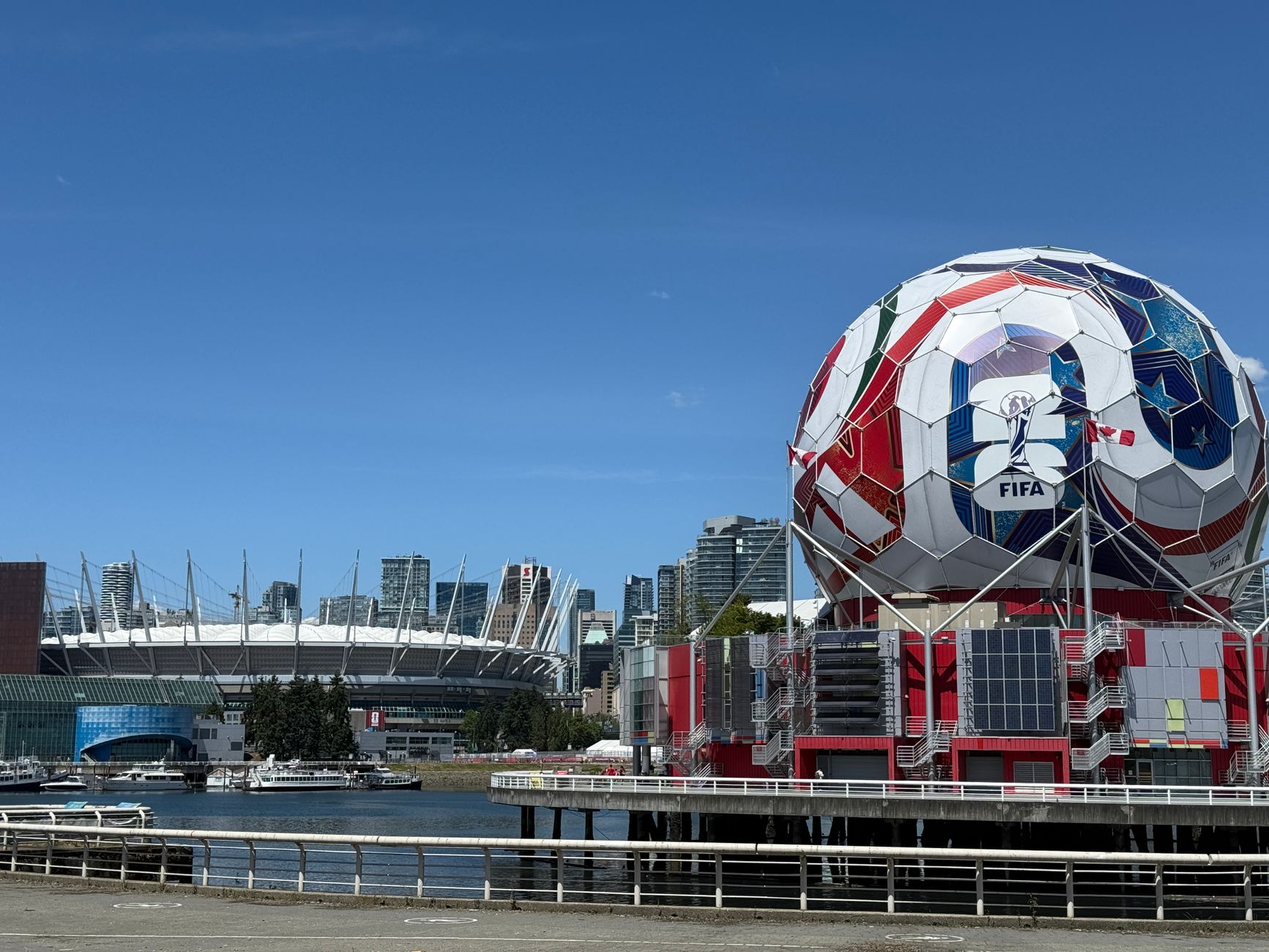
Photo by The Six on Pexels
The Bottom Line
The central fact is simple: 2026 is not one event but a collision of sport, public finance, and long-term planning, with the FIFA World Cup providing the loudest global stage. FIFA’s expanded tournament contains 48 national teams divided into 12 groups of four, followed by a Round of 32, creating a competition structure unlike the 32-team formats used from 1998 through 2022. Canada, Mexico, and the United States will host matches, making travel, time zones, squad depth, and venue logistics unusually important. According to FIFA’s official World Cup 2026 overview, the tournament’s scale is a genuine operational change, not merely a larger marketing banner.
The practical implication is that casual fans may overvalue famous teams and undervalue scheduling friction. A European favorite crossing several time zones, a South American squad adapting to heat, and a host nation receiving familiar travel conditions do not begin with identical circumstances. That does not automatically create a betting edge, because apparently the bookmakers also know how calendars work, but it does change the variables worth pricing. Football Insights should be used as a research layer: compare team form, injuries, expected line-ups, tactical matchups, and market movement before reaching a conclusion.
Social Security adds a less glamorous but more immediate financial layer. The Social Security Administration’s 2026 fact sheet lists a 2.8% COLA, a $184,500 maximum taxable earnings threshold, and a maximum retirement benefit of $4,152 per month for a worker retiring at full retirement age. Those figures affect household budgets, while the World Cup affects attention, advertising, and travel demand. Different subjects, same lesson: headline size is not the same as personal impact.
What Will Players and Fans Actually See?
Fans will see a 104-match FIFA World Cup staged across 16 host cities, while players will confront a tournament calendar requiring deeper squads, careful recovery, and tactical flexibility. The opening match is scheduled for June 11, 2026, and the final for July 19, 2026, with matches in Mexico, Canada, and the United States. The expanded field increases the number of teams reaching the knockout phase, but it also raises the cost of one poor performance because qualification pathways become more complicated and the knockout bracket begins earlier than many viewers may expect.
For players, the most visible change is workload. A national team may need multiple formations, alternate full-backs, and midfield options capable of handling different pressing systems. Coaches can no longer assume that a compact tournament group guarantees a gentle opening: unfamiliar opponents, long travel, artificial narratives, and uneven rest days can distort what looks like a straightforward matchup. [Internal Link: 2026 World Cup team tactics guide] is particularly useful when evaluating whether possession numbers reflect genuine control or sterile passing in harmless areas.
The financial data is more concrete than most pre-tournament predictions. Under the 2026 Social Security rules, the employee and employer Social Security and Medicare tax rate remains 7.65% each, while self-employed workers face a combined 15.30% rate before applicable additional Medicare taxes. The quarter-of-coverage amount rises to $1,890, and the retirement earnings test limit for people below full retirement age reaches $24,480 annually. These are not abstract policy footnotes; they determine how much income is counted, withheld, or retained.
A useful comparison is to separate exposure from outcome:
- Exposure: the number of matches, viewers, travel days, and financial decisions affected.
- Probability: the estimated chance of a team, player, or policy result.
- Price: the odds, cost, tax effect, or household value attached to that probability.
- Net position: what remains after taxes, commissions, losses, travel costs, or opportunity cost.
That framework is especially important in gambling content. A selection can win and still be a poor investment if the price was terrible. Yes, celebrating a losing value bet because the process was correct is emotionally inconvenient; that is also why most people prefer stories to spreadsheets.

Photo by Pixabay on Pexels
What Are the 3 Things That Matter Most?
For 2026 analysis, the three decisive factors are context, verified data, and price discipline. Context explains where and when an event occurs; verified data separates official facts from recycled social-media claims; price discipline determines whether a prediction has positive expected value. Remove any one of these, and the analysis becomes a polished guess wearing a tie.
1. Context changes performance
The three FIFA World Cup hosts—Canada, Mexico, and the United States—offer different climates, travel routes, stadium environments, and supporter profiles. A match in Mexico City presents a different physical challenge from one in a cooler Canadian venue, while a game in the United States may involve substantial domestic travel between host cities. Team rankings alone do not capture these conditions. The relevant question is not “Who is the bigger country?” but “How does this specific matchup behave in this specific location under this specific rest schedule?”
2. Official numbers beat viral summaries
The Social Security Administration provides exact 2026 thresholds that should replace vague claims about “higher benefits.” The 2.8% COLA moves estimated average monthly benefits for all retired workers from $2,015 before the adjustment to $2,071 afterward. The SSI federal payment standard rises from $967 to $994 for an individual and from $1,450 to $1,491 for a couple. Meanwhile, the Social Security Disability substantial gainful activity threshold becomes $1,690 per month for non-blind individuals and $2,830 for blind individuals.
The same standard applies to football. Use official FIFA match information, federation announcements, club injury reports, and credible statistical providers rather than anonymous screenshots. [Internal Link: football prediction bankroll calculator] can help translate a probability estimate into a controlled stake, but no calculator can rescue a fabricated injury update. Technology remains impressive; it has not yet developed the ability to turn nonsense into evidence.
3. Price discipline protects the bankroll
A prediction is not automatically valuable because it sounds intelligent. Suppose a team is estimated to have a 55% chance of winning. Fair decimal odds are approximately 1.82 before margin and uncertainty; taking 1.65 would require a stronger case than simply saying the team has better players. Track the stake, closing price, result, and actual return on investment across a meaningful sample. Ten bets prove almost nothing, particularly when one late red card can make a spreadsheet look like a personal philosophy.
For Football Insights readers, a practical pre-match checklist is:
- Confirm the venue, kickoff time, and travel sequence.
- Check expected line-ups, suspensions, and late injury information.
- Compare recent performance with opponent-adjusted metrics.
- Estimate fair probability before viewing promotional prices.
- Record the stake and closing odds after the match.
- Review the net position, not only the winning percentage.
Want a more disciplined way to evaluate the numbers? Start with the research tools before committing any money.
Why Do Edge Cases and Gotchas Matter in 2026?
Edge cases matter because official headline figures often hide the conditions that determine real-world results. In 2026, those conditions include the FIFA World Cup’s expanded knockout format, Social Security earnings limits, disability thresholds, and the difference between advertised odds and effective returns. A number without its qualifying rule is not clarity; it is a trap wearing a decimal point.
For Social Security beneficiaries below full retirement age, the 2026 retirement earnings test withholds $1 in benefits for every $2 earned above $24,480. In the calendar year a person reaches full retirement age, the higher threshold is $65,160, with $1 withheld for every $3 above that limit before the month full retirement age is reached. Beginning with the month an individual reaches full retirement age, there is no earnings test. The Congressional Research Service and Social Security Administration materials are useful companions here because eligibility rules can matter more than the headline COLA.
Another easily missed detail is that the 2026 COLA does not mean every household receives an identical dollar increase. Benefit histories, Medicare deductions, taxation, and eligibility category all influence the amount that reaches a bank account. The SSA estimates average retired-worker benefits at $2,071 per month after the adjustment, but an average is not a personal guarantee. Anyone planning around a precise amount should check their own official benefit record rather than copy a national average from an article.
In football, the comparable mistake is treating the 48-team tournament as a simple expansion of the old format. The 2026 World Cup introduces a Round of 32, and the group-stage structure means third-place teams can influence qualification calculations. That creates a tactical incentive for some teams to protect goal difference, manage cards, or prioritize a draw in a way that would have looked different under previous formats. A conservative group-stage approach may be rational, but it can also create dull football; the beautiful game occasionally resembles an accountant negotiating a settlement.
Information gain comes from tracking what is usually ignored:
- Rest disadvantage: count recovery hours, not just calendar dates.
- Travel burden: map the previous venue, next venue, and time-zone change.
- Market timing: record opening and closing odds to identify whether your information was early or merely unpopular.
- Rule context: attach every Social Security threshold to age, earnings status, and benefit category.
- Sample size: separate a genuine trend from a three-match anecdote.

Photo by Kampus Production on Pexels
A further operational point deserves attention: tournament forecasts should be updated in layers rather than rewritten emotionally after every friendly. First establish a baseline using qualifying results and opponent strength; next adjust for squad availability; finally incorporate venue, rest, and market price. Changing all assumptions at once makes it impossible to determine what actually improved the forecast. The same applies to personal finance: update income, deductions, and benefit estimates separately so one optimistic assumption does not quietly contaminate the entire plan.
What Should You Track Before Making a 2026 Prediction?
Before making a 2026 prediction, track verified team news, venue conditions, tactical matchups, market price, and your own historical performance. The best workflow is not the loudest one: it is a repeatable process that records assumptions before kickoff and checks them afterward. This prevents hindsight from masquerading as skill, a favorite hobby of people who discovered the correct answer five minutes after the match ended.
Football Insights can help organize tournament coverage around player statistics, formations, expected goals, pressing intensity, set-piece threat, and defensive transitions. However, each metric needs context. Expected goals can identify chance quality, but it does not automatically predict how a team handles a low block; possession can reveal territorial control, but it does not prove that a side created danger. Review at least five to ten comparable matches where possible, and discount numbers produced against dramatically weaker opposition.
For readers managing money alongside sports interest, keep betting funds separate from rent, debt payments, emergency savings, and retirement income. A fixed-unit approach—such as one unit representing 0.5% to 1% of a dedicated bankroll—limits the damage from variance. Never increase a stake merely because a previous selection lost, and never treat a Social Security payment as disposable capital. The National Council on Problem Gambling recommends using limits and seeking help when gambling stops being entertainment and becomes financial pressure.
“Facts are stubborn things,” the Social Security Administration effectively demonstrates through its detailed tables, even if that phrase is not a substitute for reading the tables. For 2026, the useful habit is simple: save official sources, timestamp your information, and distinguish confirmed data from forecasts. If a prediction cannot explain its inputs, its probability, and its price, it is not analysis. It is theatre with a spreadsheet.
Verdict
2026 is best understood as a year of scale and scrutiny: FIFA expands the World Cup to 48 teams and 104 matches, the United States, Canada, and Mexico share hosting duties, and the Social Security Administration applies a 2.8% COLA alongside revised earnings and taxable-income thresholds. Major League Baseball’s 2026 draft story will develop more slowly, because prospects do not become major leaguers merely because a commissioner announces their names. That inconvenient delay is called development.
The winning approach is to separate excitement from evidence. Follow official FIFA schedules, compare tactical conditions, calculate fair prices, monitor net returns, and verify Social Security figures through the SSA rather than social posts. Football Insights can provide daily tournament context, but the final decision remains yours—and yes, that means taking responsibility for the number you wrote down before kickoff.
Ready to follow the 2026 World Cup with sharper data and less ceremonial nonsense?
Frequently Asked Questions
Q: What is the FIFA World Cup 2026 format?
A: The FIFA World Cup 2026 features 48 teams, 12 groups of four, and 104 total matches. The top two teams from each group plus the eight best third-place teams advance to a 32-team knockout phase. Canada, Mexico, and the United States host the tournament across 16 cities, with the opening match scheduled for June 11 and the final on July 19, 2026. The larger field creates more matches and more complicated qualification scenarios than the 32-team format.
Q: How can I analyze a 2026 World Cup match?
A: Analyze a 2026 World Cup match by checking team news, venue, travel, rest, tactical styles, and available odds before estimating probability. Review expected line-ups, injuries, suspensions, opponent-adjusted statistics, and set-piece performance rather than relying on rankings alone. Then calculate fair odds and compare them with the market price. Record your estimate and stake before kickoff so the final result does not rewrite your memory.
Q: What is the 2026 Social Security COLA?
A: The 2026 Social Security cost-of-living adjustment is 2.8% for Social Security and Supplemental Security Income recipients. The SSA estimates average retired-worker benefits rising from $2,015 to $2,071 per month, although individual amounts vary with benefit history and deductions. The SSI federal payment standard becomes $994 per month for an individual and $1,491 for a couple. Beneficiaries should confirm personal figures through official SSA records.
Q: What is the difference between the 2026 COLA and maximum taxable earnings?
A: The 2026 COLA adjusts benefit payments, while maximum taxable earnings determines how much employment income is subject to the Social Security portion of payroll tax. The COLA is 2.8%, whereas the maximum taxable earnings limit rises from $176,100 in 2025 to $184,500 in 2026. These figures affect different sides of the system and should not be treated as interchangeable. Medicare earnings taxation remains uncapped for the standard Medicare portion.
Q: How much can a person earn before Social Security benefits are withheld in 2026?
A: A beneficiary below full retirement age can earn $24,480 in 2026 before the retirement earnings test applies. The SSA withholds $1 in benefits for every $2 earned above that limit. In the year a person reaches full retirement age, the higher threshold is $65,160, with $1 withheld for every $3 above the limit before the applicable month. Beginning with the month full retirement age is reached, the earnings test no longer applies.
Q: Why can a strong World Cup favorite still be a poor bet?
A: A strong World Cup favorite can be a poor bet when the offered odds are lower than the team’s true probability justifies. For example, a 60% estimated chance implies fair decimal odds near 1.67 before margin, so accepting 1.45 may offer negative expected value despite a likely win. Travel, injuries, opponent style, and market movement can also reduce the initial estimate. Track closing odds and return on investment instead of judging every selection only by whether it won.
Q: What should I do if my 2026 prediction information is outdated?
A: Replace outdated information with timestamped data from FIFA, national federations, clubs, reputable statistical providers, or the Social Security Administration. Recheck line-ups, injuries, venue changes, kickoff times, and odds immediately before acting. Do not silently preserve an old prediction after a major variable changes; either recalculate the probability or cancel the decision. That discipline protects both analytical quality and the bankroll, which is more useful than being theatrically confident.
Football Insights · Blueprint Archive